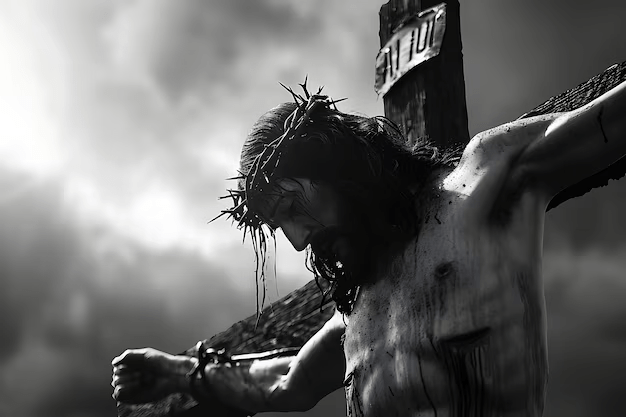
Our Savior came to earth to secure our eternity. He came to rescue us from sin and reunite us with Him in Heaven. Jesus was the competition of the mosaic law and the offer of a new covenant based in Him. He was the Word made flesh and showed the world what the Holy Spirit in a sinless vessel looked like. His ministry consisted of many teachings that clarified the heart of God and corrected the error that man had added. As He is hanging on the cross as a sacrifice for the sins of all who choose to receive Him, He speaks seven times that are noted in the gospels. Knowing His purpose was to draw us to Him: And I, when I am lifted up from the earth, will draw all people to myself. (John 12:32), let us take the time to look at what He spoke to us when He knew He had the attention of His people.
Take yourself to the cross, the source of your salvation. Imagine being at the feet of your Lord and He is speaking with His last breaths. He knows that His followers do not fully understand why He is suffering. He sees men (Pharisee and Scribes) that have spent their lives studying Him seeking His death because they don’t want to return the power they have created back to God. He has moments left to speak words that will echo through eternity as death is concurred and the enemy is defeated. Sit with these phrases and allow the Word to continue to speak to you now. Put yourself there and seek His face as He speaks.
“Father, forgive them, for they do not know what they do.” (Luke 23:34)
He is praying for the forgiveness of those who are fulfilling scripture. We read this and assume He is forgiving the Pharisee, the Roman soldiers, and those who mock Him. That is true, but who else could He be talking to? He is looking down from the cross at His mother and some of His followers and sees them mourning. We can’t blame them after watching Him suffer the pain and humiliation that no person has ever deserved less. They are also mourning His death, which is the source of their salvation. The short sidedness of man has resulted in tears that are poured out at the cross but will be turned to joy through the Holy Spirit and His resurrection. The physical pain of crucifixion is combined with the emotional pain that He knows He cannot comfort hearts that are unable to realize the significance of this moment. He is suffering and dying when there is not complete understanding. Jesus hangs on the cross with the ability to empathize with our human nature, see our hearts, and speaks to the Father on our behalf. He loved when it was the hardest and forgave when human nature made it impossible. Jesus knew that his hour had come to depart out of this world to the Father, having loved his own who were in the world, he loved them to the end. (John 13:1)
“Truly, I say to you, today you will be with me in Paradise.” (Luke 23:43)
This is the phrase that overcame religion. Religion is man seeking God and Jesus is God seeking man. The new covenant was established by God, through God, so that man could not corrupt eternity. Jesus came to correct the false religion that was embodied in the Pharisee. While man can honor God with acts of reverence, those times do not earn the favor of God. Your obedience and submission accomplish that. He has no use for rituals, traditions, or religious hierarchies. Those things without faith and relationship have no value. We see a criminal that had never taken communion, been baptized, or accomplished anything in the name of our Lord. We also see a man who will join Jesus in Heaven because He had the same faith in God that made Abraham the father of many nations. The same faith that healed the sick, cast out demons, raised the dead, and secures your salvation. While religious acts are not bad in and of themselves, make certain to understand that without a submitted heart seeking God in those moments, they have no value compared to what God desires. For it is by grace you have been saved, through faith – and this is not from yourselves, it is the gift of God – not by works, so that no one can boast. (Ephesians 2:8-9)
“Woman, behold your son!” and to the disciple, “Behold your mother!” (John 19:26-27)
While our Lord is suffering, He is still selflessly concerned with the wellbeing of His mother. His responsibility to His family is not lost in all His pain. He is the leader of His faithful and still the leader of His family. He is still caring, compassionate and empathetic for the people He is temporarily leaving. Not spiritually but physically, which is all they could conceive of at that moment. The giving of care for His mother to His beloved disciple is the establishment of the body of Christ as family. His disciple has taken a position as His brother. We know Jesus had actual bothers called out in scripture, but His disciple is called a brother and takes that responsibility through faith and action. Jesus was the firstborn among many brethren (Romans 8:29) and established a family meant to bear one another’s responsibilities in affliction (Galatians 6:2). The wellbeing of Mary is secured into a family of faithful believers which is the establishment of the true meaning of the church an important role of the body of Christ.
“My God, my God, why have you forsaken me?” (Matthew 27:46; Mark 15:34)
This is a moment where it is hard to give due justice. This is the only time Jesus refers to God as “my God” and not “Father.” This address is more formal and less personal. The idea we must consider is that God had to separate Himself from the person of Jesus for the first time because He cannot be a part of the sin that is about to be laid upon His Son. The perfection and purity of God cannot be tainted with sin.But your iniquities have made a separation between you and your God, and your sins have hidden his face from you so that he does not hear. (Isaiah 59:2) Jesus fulfills scripture and shows what sin does to our relationship with the Father. The greater message here is what Christ does when He does not sense the presence of the Father. He falls back on scripture. He quotes Psalm 22. The original reference to a Psalm was through the first sentence which established the summarized theme. Not only does Jesus point us back to the Word of God in Him but shows us the value of reading Psalm 22 in the light of what is occurring. Scripture and this moment are an anchor to our faith. Read the Psalm as it describes His despair, confirms His faith, and describes this moment hundreds of years before it happens. It describes crucifixion hundreds of years before it existed. Jesus points us to hope, faith, and the prophetic power of the Word before it was flesh.
“I thirst.” (John 19:28)
The humanity of Jesus is made clear hear and, in a way befitting the Messiah, He makes another prophetic fulfillment by quoting Psalm 69:21. When He says this, He is offered vinegar (sour wine) to drink. This offering of a soaked sponge takes place immediately after He quotes Psalm 22 in the gospels of Matthew and Mark. Could the living water of John 4 be explaining the thirst that will be quenched by Him through His sacrifice? “Everyone who drinks of this water will be thirsty again, but whoever drinks of the water that I will give him will never be thirsty again. The water that I will give him will become in him a spring of water welling up to eternal life.” (John 4:13-14) In His struggle and suffering Jesus leans on scripture, He is scripture. He fulfills the Word, relies on the Word, and becomes the Word.
“It is finished.” (John 19:30)
It is complete, fulfilled, paid in full. Tetelestai. But consider what is finished. The Mosaic Covenant, the ceremonial and civil laws given to Moses are fulfilled and replaced with faith. The New Covenant described in Jeremiah is based on faith in Jesus. The moral laws are fulfilled in the commandment of Jesus to love God and each other. The curtain to the holy of holies in the temple is about to be torn ending the ability to sacrifice. The high priest of the temple is now replaced by the High Priest of prophecy. The ability to follow the laws is now gone, being completed by a sinless sacrifice. His ministry of expressing the Word of God in the flesh is complete. His name and the salvation it provides will begin to spread across the world fueled by the Spirit of God. The penalty for sin and disobedience is death and separation from God the Father. The debt we owe for our fallenness, since the garden, is death. The debt of our lives has been paid in full and we a redeemed into a newness of life with Jesus. The hold of sin is defeated when our heart chooses the Lord. In Christ you have been brought to fullness (Colossians 2:10) Only God can promise completeness while everything else tries. Jesus finished what we could never accomplish. If you accept the cross was for you, your adoption is now complete as well.
“Father, into your hands I commit my spirit!” (Luke 23:46)
Christ hands His spirit to the Father. This is worship. Worship is obedience, submission, and faithfulness. He does this using scripture once more Psalm 31:5. Have we seen the pattern? Jesus is always focused on God; always impowered, led and reliant on God’s Word. He is preaching scripture and praying to the Father at the same time. He is the firstborn among brethren and is showing us that He is taking His place at the right hand of God to speak on our behalf. But when this priest had offered for all time one sacrifice for sins, he sat down at the right hand of God, and since that time he waits for his enemies to be made his footstool. For by one sacrifice he has made perfect forever those who are being made holy. (Hebrews 10:12-14) Jesus is the way to Heaven and eternal life with God. He shows us here that He is leading us. I am the way, and the truth, and the life. No one comes to the Father except through me. (John 14:6) We are chosen to follow Jesus here on earth and then to join Him where He leads us now and for eternity. Follow our Lord and commit your heart and life to God. Then in your last moments your commitment and faith will lead you into the hands of God. Our Savior lights our path.
 His Glory Blog
Leave a comment